

















 Email Support:
 WhatsAPP:
Processing bulk fresh or chilled meat requires matched motor power, worm screw speed, and plate dimensions. Meat temperature, blade sharpness, and gearbox maintenance directly control hourly output and product texture.
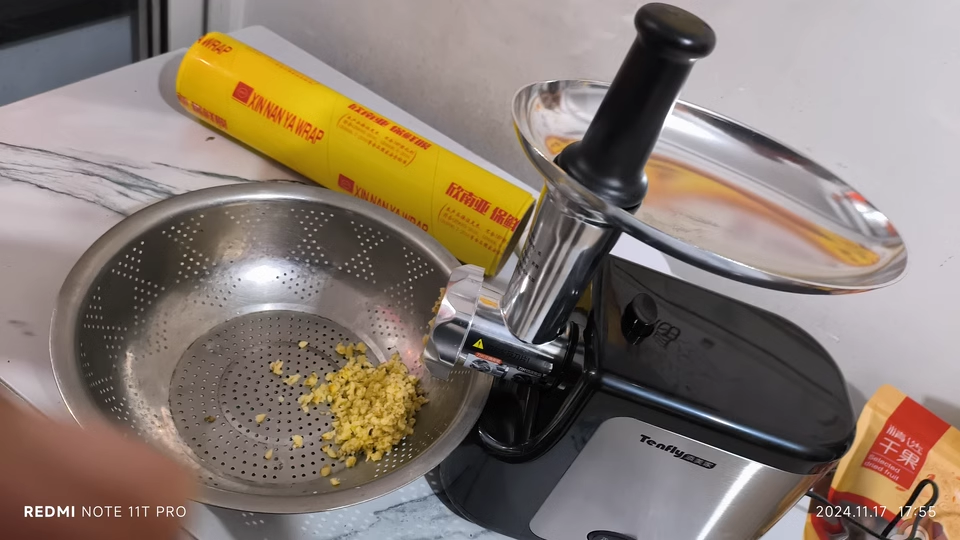
Machine Categories & Technical Parameters
Different processing volumes dictate gear drive types and feeding tube sizes:
- Countertop Processing Units: 0.75kW to 1.1kW motor, #12 or #22 head size. Processing speed ranges from 120kg/h to 220kg/h (220V single-phase power)[cite: 7].
- Floor-Standing Heavy Duty Grinders: 2.2kW to 5.5kW motor, #32 or #42 head size. Hourly output reaches 400kg/h to 800kg/h (380V 3-phase standard, 220V optional)[cite: 7].
- Mixer-Grinder Machinery: Twin-shaft paddle mixes fat and lean meat before extruding through hole plates (plate sizes: 3mm, 5mm, 8mm, 12mm).
Never run grinder empty.
- Automated Industrial Equipment: Continuous feeding hopper with safety sensor guards (MOQ: 1 unit, packed in export plywood case)[cite: 7].

Material, Drive Systems & Operational Boundaries
Structural specs determine machine lifespan under daily washdown routines:
- Head & Screw Material: SUS304 food-grade stainless steel head prevents rust from brine and acid exposure (wall thickness ≥ 2.0mm)[cite: 7].
- Gearbox & Reverse Function: Oil-bath gear drive handles heavy loads without slipping. Reverse switch dislodges bone fragments and sinew blockages[cite: 7].
Check oil level monthly.
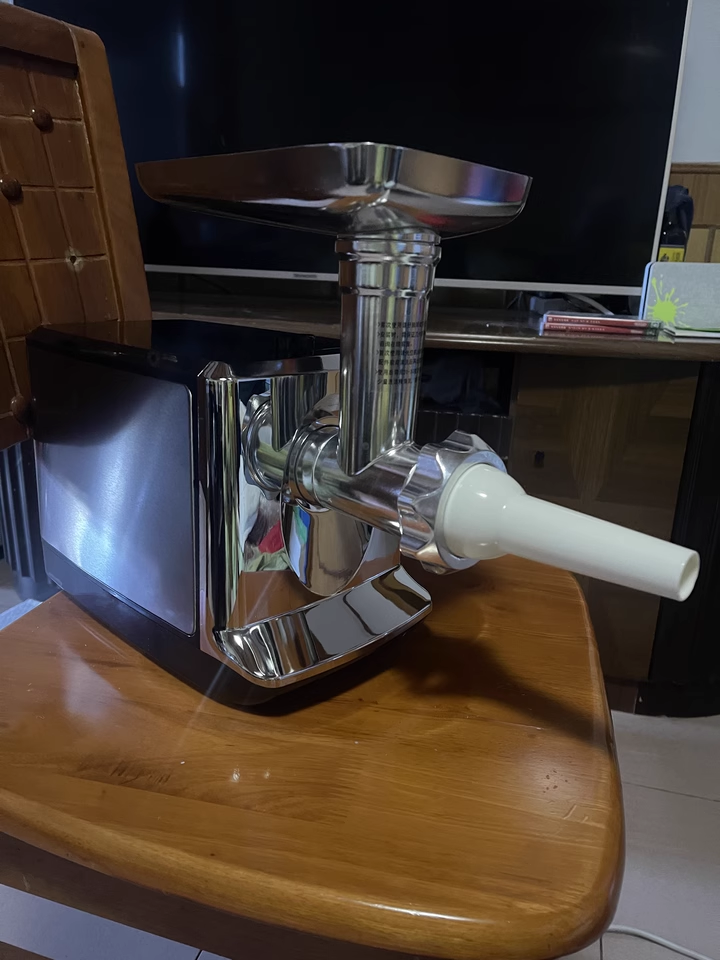
Shop Floor Operations & Cleaning Protocol
Proper thermal control and sanitation protect meat texture and prevent gearbox strain:
- Temperature Control: Chill raw meat cuts to 0°C–2°C prior to grinding. Chilling meat to 0°C–2°C keeps fat firm and prevents smearing against extrusion plates[cite: 7].
- Daily Washdown: Turn off main breaker, remove tray, worm screw, cutting blade, and orifice plates[cite: 7]. Flush contact surfaces with 60°C warm water and neutral detergent.
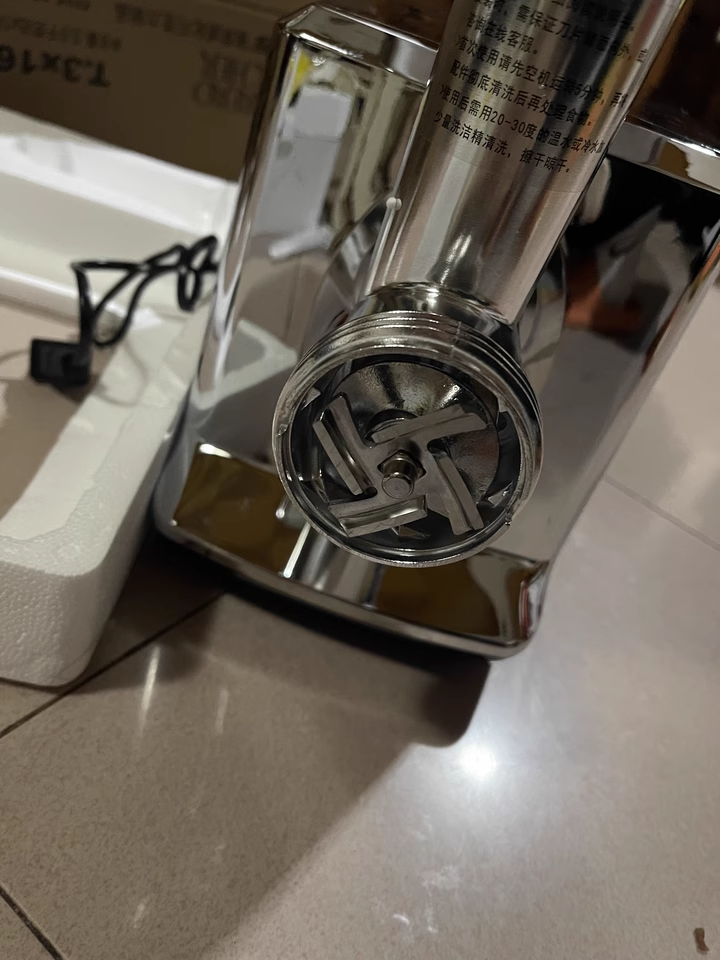
- Blade Resharpening: Inspect four-blade knives weekly. Dull edges tear muscle fibers, raising meat batch temperature during processing[cite: 7].
Smaller butcher shops require compact footprints under 0.35 m² while maintaining 150kg/h minimum capacity. Cleaning steps remain identical across all machine sizes.
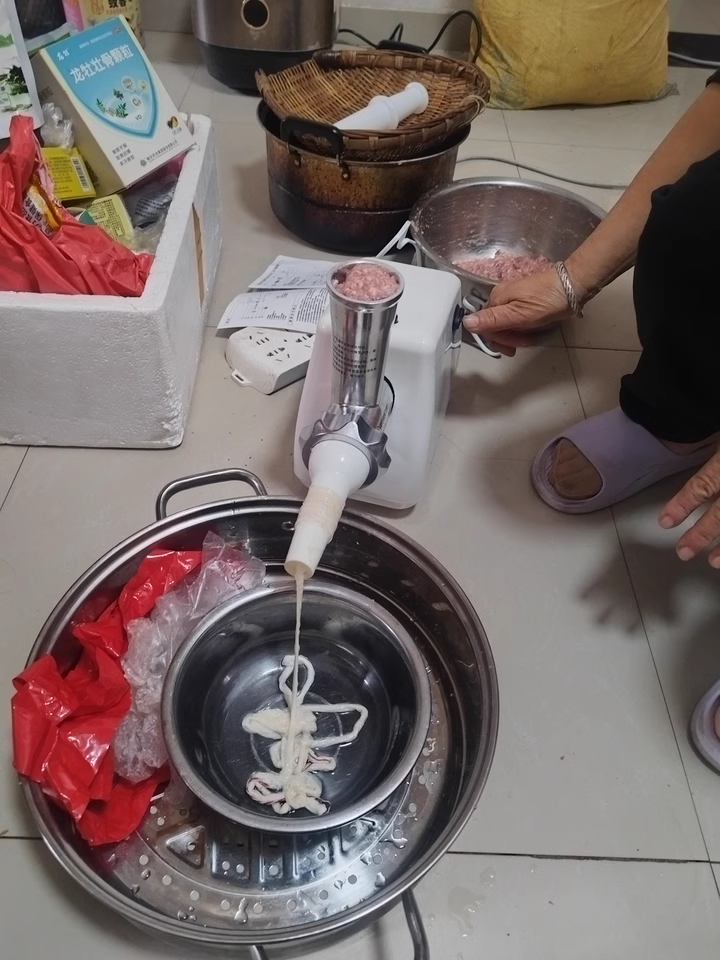

Newin SJ02T 2T/h Industrial Sugar Cane Juicer
Newin SJ01T 1T/h Industrial Sugar Cane Juicer
Newin QD-550 Commercial Meat Dicing Machine – 700–900 kg/h
Newin QD-350 Meat Dicing Machine for Fresh & Frozen Meat
Newin DMS-201 Multi-Functional Meat Grinder & Cutter Machine
Newin DM-32 Industrial Stainless Steel Commercial Meat Grinder (DM-12 / DM-22 / DM-32)
Newin NW-250KS Tabletop Commercial Bone Saw Machine
Newin NW-310K Variable Speed Floor-Type Bone Saw Machine
Newin NW-250CC Floor-Type Commercial Bone Saw Machine
Newin NW-250CE Tabletop Stainless Steel Bone Saw Machine
Newin NW-PF1S Square Pan Commercial Rolled Ice Cream Machine
Newin NW-PF1R Single Round Pan Thai Rolled Ice Cream Machine